01A leak-detection visit should mark the wet path and say what has to be opened — not guess through the wall.
Hidden water in a Gordon's Bay house rarely shows as a dripping tap. It shows as a municipal bill that jumped, a bathroom wall that stays cold and soft, or a meter disc that keeps spinning when the geyser and every outlet are closed. Sometimes a ceiling stain returns a week after it was painted. Sometimes a cupboard smells of damp and there is no wet joint you can point at. Those are the jobs this page is for.
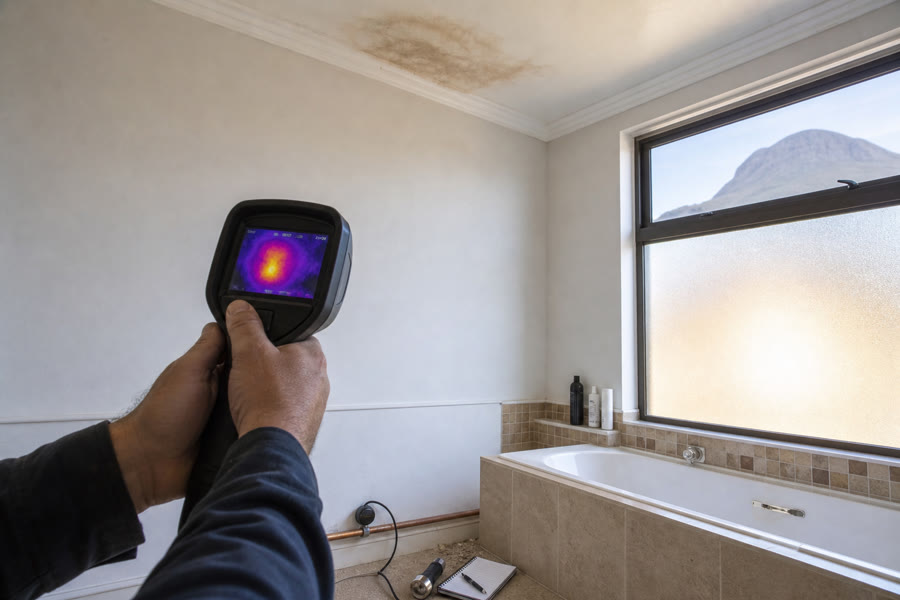
Water leaving the system under a slab, inside a wall, on a buried supply or on a geyser tray that only weeps when the unit cycles is leak detection — not a mixer repair. The work is to locate the wet path with as little opening of the house as the layout allows, then decide what the repair actually is. Across the trade that commonly starts with isolating the property and watching the meter. If water is still leaving, the follow-up is listening for movement under pressure, scanning a floor or wall for a temperature track, and using a tracer where the pipe run is buried or boxed in. Those methods are how the job is typically done. We name them at trade level. We are not listing branded instruments we claim to own.
What we need from you is the suburb — Gordon's Bay, Strand, Gordon's Bay or Helderberg — a description of what you have already noticed, and photos of the meter, the damp and the stopcock. From that we can say whether the next step looks like a detection visit, a visible repair, or a pause while you speak to the insurer. We will not invent a price band on this page. Access and the surface that has to be opened change the figure more than the town name does.
A plumber can find some hidden leaks on an ordinary visit: a weeping geyser tray, a joint in a ceiling void, a toilet supply that only shows when the cistern fills. Under-slab work and long buried runs are a dedicated locate before a repair quote. We will say which the job looks like from your photos.